In our readings for today we have a thread running through them, or perhaps we should say a vine is running through them. We have three readings that talk about a vine and a vineyard. The Psalm talks about a vine that has been laid to waste, and the Psalmist is asking why did this happen? The vine shows up in Isaiah, and Isaiah gives us the answer. What has happened is that the vine has not been well tended, it has not been well taken care of, and as a result it has been producing the wrong kind of fruit. It has been producing the wild grapes of injustice, of violence, and bloodshed, instead of the good grapes of love and mercy and justice. As a result, it has been laid to waste. It has been allowed to be overrun.
This vine shows up again in our Gospel, although this vineyard is a little bit different. There is no sense that in the Gospel reading this vineyard is producing bad grapes. For all we know it is producing great grapes that are made into wonderful wine that gladden people's hearts. The problem with this vineyard is that those who have been tending to it have forgotten a really important fact: it is not theirs. They are but tenants, and yes, while some of those grapes and some of that wine will be for their benefit, it belongs to somebody else. It is not theirs to do what they like with it.
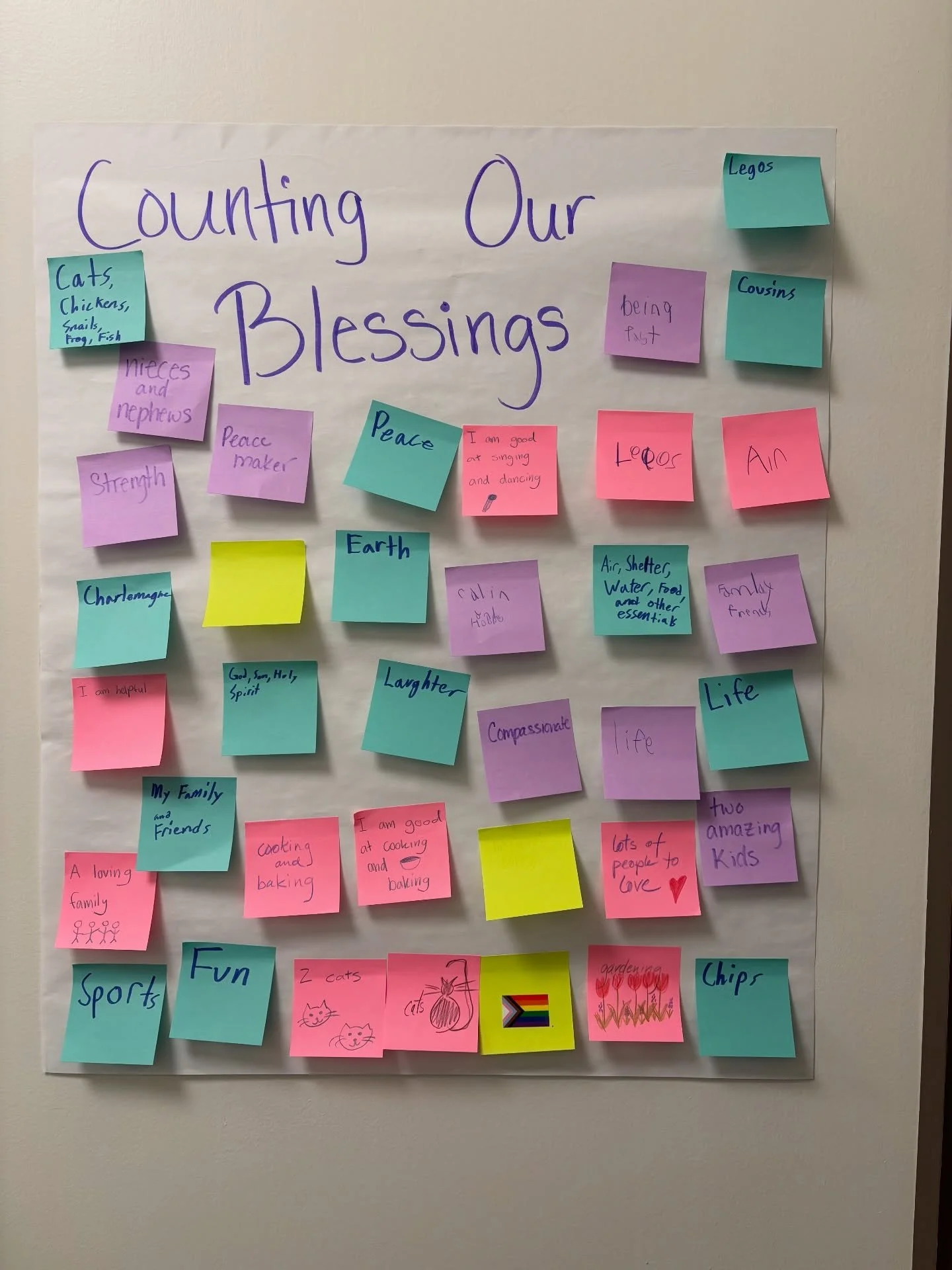
At the heart of these readings, at the heart of this vineyard, is the question of the stewardship of God's vision. Or to put it another way, all that we have and all that we are is a gift from God to steward in accordance with God's dream. His vision of stewardship has its roots in Creation when God made everything and called it all good. God made humanity, and God invited us to steward that Creation. We don't own it, but it is there for our use, for the thriving of ourselves and others. This flourishing is not just for us, but for future generations. All that we have, and all that we are is a gift from God.
This vision of stewardship is quite simple in many ways, and yet it has far-reaching implications that we have to consider. This is not a comprehensive list, but here are a few ways that God's vision of stewardship has implications for our lives. It has implications for the way that we steward the world, the literal vineyards and the rest of the natural world that it is there for our flourishing, and also for future generations. We are to care for the rivers and lakes, the seas, the oceans, the mountains, the plains, the valleys, the deserts. These are the things for us to take care of.
Stewardship also implies how we steward our relationships to our neighbors, especially those most in need. That is the fundamental issue in the Isaiah reading. The people are not stewarding relations with their neighbors. They are ignoring and not taking care of the orphans and the widows. They are not considering the common good. They are not considering the flourishing of everyone, but are allowing injustice and oppression to run wild. They are not stewarding the relations with their neighbors.
Stewardship also implies that we steward our relations with our family, our friends, our parents, our children, our grandchildren, our siblings, and our spouses. How do we treat them? Do we treat them well? Do we tend to those relationships and care for them? Do we think that we own them? Sorry parents, you don't own your children. You can't own another person. They are there for you to steward. They are a gift from God. You get 18 years to steward them, and then you let them go. They are not yours, they are God’s glorious creation that you've been given to steward for a time.
We are stewards of our talents and skills. Do we use those for the betterment of others, to bring ourselves and others joy, to make this world a more just place? Do we use our gifts and skills in accordance with the well-being of this world? Do we steward these gifts and skills that have been given to us by God?
How do we steward our money, our financial resources? Do we think it is ours? We are not born with it, and we don't get to take it with us when we die. It is a gift that we are entrusted with to steward for a while. While there is a legal reality of private property, the spiritual reality of stewardship is that which you have is that which you steward. It is not mine, but it is mine to care, to steward for my own benefit, but also the thriving of my neighbor, the thriving of this world.
There is also an implication on how we steward our ministry here at Saint Mary's. We inherited this community, it's buildings, it's ministries 170-ish years or so ago. We inherited this ministry and we will pass it along someday. It is not ours. We are stewards of it.
How do we care for it? There are many ways that this vision of stewardship, this vision that all that I am and all that I have is a gift from God, plays out in our lives. It is so very simple, and yet it makes all the difference. It changes nothing, and it changes everything. When we start looking at the world in this way, when we begin to realize that it is not ours to do whatever we want with, it is not ours to hoard and to keep for eternity. It is ours to steward, something we have for a time, a gift from God to be used for this world.
In these last two visions of stewardship, we were talking about money and Saint Mary's. These two implications of stewardship are the very thing we deal with every year in our annual pledge drive, which we kick off today. You know I have to talk about it for the next three weeks. At the heart of the annual pledge drive is this very question of stewardship. It is about our money we are being asked to give, and it is about the ministry of Saint Mary's. It is an opportunity to look at it in this larger image of stewardship. It is opportunity for us to take time to reflect on how it is we are stewards of our money, our financial resources, not just in terms of this one current pledge drive of Saint Mary's but how we steward the rest of it. It is not just about the money for Saint Mary's, it is about the entirety of the ministry, how we steward this ministry.
Money of course plays a role in that, and so we focus on it. But it is also an opportunity for us to start shifting our minds, and think how the money we give to Saint Mary's can do the work we want it to do. We should shift our thinking to how this gift that God has given us can be shared back with God to do the work that He has called us to do. Every week we sing “all things come of thee, O Lord, and of thine own have we given thee” as we bring the offering forward. This song we sing is rooted in this vision of stewardship.
So, my friends, I encourage you in the coming weeks to spend time thinking about stewardship, your stewardship of your financial resources, and our stewardship of our ministry. Spend time thinking about your stewardship of this world, your stewardship of your relationships. Think about these issues raised in the Psalm and in Isaiah about the ways we are not tending well. Think also about the way we misunderstand and think it belongs to us instead of belonging to God. Spend your time in reflection upon all of that. If you are not a part of Saint Mary's, perhaps you are just visiting today, you can still take time to think about this question of how you look at the world and creation. Do you see it as a possession that can be owned, or can you begin to shift it and think of it as a gift from God that belongs to God, but one that you can tend to and care for, and utilize for this world, for yourself, for your family, for your friends, for your neighbor, for all of God's creation.
AMEN