In today’s Gospel of Matthew, we hear the first of three parables about seeds and growth. There will be another parable about seeds next Sunday, and the Sunday after that. The parable for today is filled with so many images that the disciples are quite confused and need Jesus to explain it to them. We, too, can be quite confused, especially because this parable can take on different names and go down different paths. It may be called the Parable of the Sower. But who is the Sower? Is it Jesus, who sows the Word of the kingdom? Is it God the Father, who sows gifts in abundance in a haphazard way, to fall where they may? Are we the Sower, trying new programs and ministries with great hopes that they fall on fertile soil? Perhaps this parable could be called the Parable of the Seeds. The seeds could be the teachings of Jesus, or the gifts of God. Are we the seeds? Are we scattered about, to see where we might grow? It may be called the Parable of the Soil. Are we the soil, receiving these gifts but producing good results only 25 percent of the time? Only 25 percent of the time. That is difficult to hear. For today I would like us to consider the Parable of the Hundredfold Harvest.
“But as for what was sown on good soil, this is the one who hears the word and understands it, who indeed bears fruit and yields, in one case a hundredfold, in another sixty, and in another thirty.”
In first Century Palestine sevenfold meant a good year for a farmer, and tenfold meant true abundance. The words of Jesus use thirtyfold which could feed a village for a year. Imagine when he says sixtyfold or a hundredfold.
If the parable ended with a sevenfold harvest from the good soil, then Dayenu, as our Jewish brothers and sisters would say. It would have been enough. Let me explain.
There is a time during the seder meal on the first night of Passover, while recalling the story of the Exodus, that Dayenu is sung in Hebrew. It is a song of gratitude that recalls in the story of the Exodus from Egypt the kindness of God towards God’s people, and proclaims that each kindness alone, by itself, is enough. Here are some of the verses, translated into English.
If God had brought us out from Egypt, and had not carried out judgments against our captors -Dayenu - it would have been enough.
If God had split the sea for us, and had not led us through it onto dry land - Dayenu - it would have been enough.
If God had led us through it onto dry land, and had not drowned our oppressors in it – Dayenu.
If God had drowned our oppressors in it, and had not supplied our needs in the desert for forty years - Dayenu.
If God had supplied our needs in the desert for forty years, and had not fed us the manna - Dayenu.
If God had brought us into the land of Israel, and had not built us the Holy Temple – Dayenu, it would have been enough.
Even though I have experienced a seder meal, I was not familiar with this song of remembrance and gratitude. It wasn’t until I recently watched a series called The Chosen, available through streaming or on DVD, that I understood this hymn. The series is a depiction of Jesus’ years on Earth, and the call of his disciples. Towards the end he gathers with his twelve apostles for the seder meal, which we know now as the Last Supper. The apostles take turns around the table, telling the story of the Hebrew people in the words of the hymn, Dayenu. In this telling, it ends with James, the brother of John and son of Zebedee, adding one more verse: “If God had only built the Holy Temple and not sent the Messiah in our lifetime, it would have been enough - we would have waited, but You chose us, and it is enough."
The series also has a scene where the women who loved Jesus and followed him recite their own personal Dayenu at their last meal with him. Here are two verses from it.
Mary the mother of Jesus says to him: “If I had only been given the joy of holding you in my arms and you had not performed signs and wonders, it would have been enough.”
And then Mary Magdalene says to him: “If you had only performed signs and wonders and not called me by name, it would have been enough.”
Even in today’s parable where the seeds do not fall on the best soil, there is enough. It makes me think about a voluntary plum tree in my backyard. It grew up amongst the forsythia and so we didn’t notice it until this year when it got tall enough for us to see it bloom and then produce fruit. If a bird had only found nourishment from a plum, and not dropped the seed in my yard to give me a plum tree, it would have been enough.
Where is Dayenu for us? We look at our church, St. Mary’s, and we find it filled with the gifts of seeds that grow into ministry in God’s name.
If God had only called one young man to be our rector, and not sent another to care for us, our children, and our youth – Dayenu - it would have been enough.
If God had only given us our two priests to visit us when we are sick, and not given us a pastoral care team of loving people – Dayenu - it would have been enough.
If God had only given us a few workers to make peanut butter and jelly sandwiches for hungry people, and not given us workers in the kitchen to provide hot meals for the hungry – Dayenu - it would have been enough.
If God had only given us workers in the kitchen, and not generous people throughout the parish who give bottles and cans that provide Conestoga huts for those who need housing – Dayenu - it would have been enough.
For me, if God had heard only my request to fill 5 HO! HO! HO! stockings each year, and not given me a parish family that wants to fill twentyfold, it would have been enough. You can see that I can go on and on with the seeds that have been sown here.
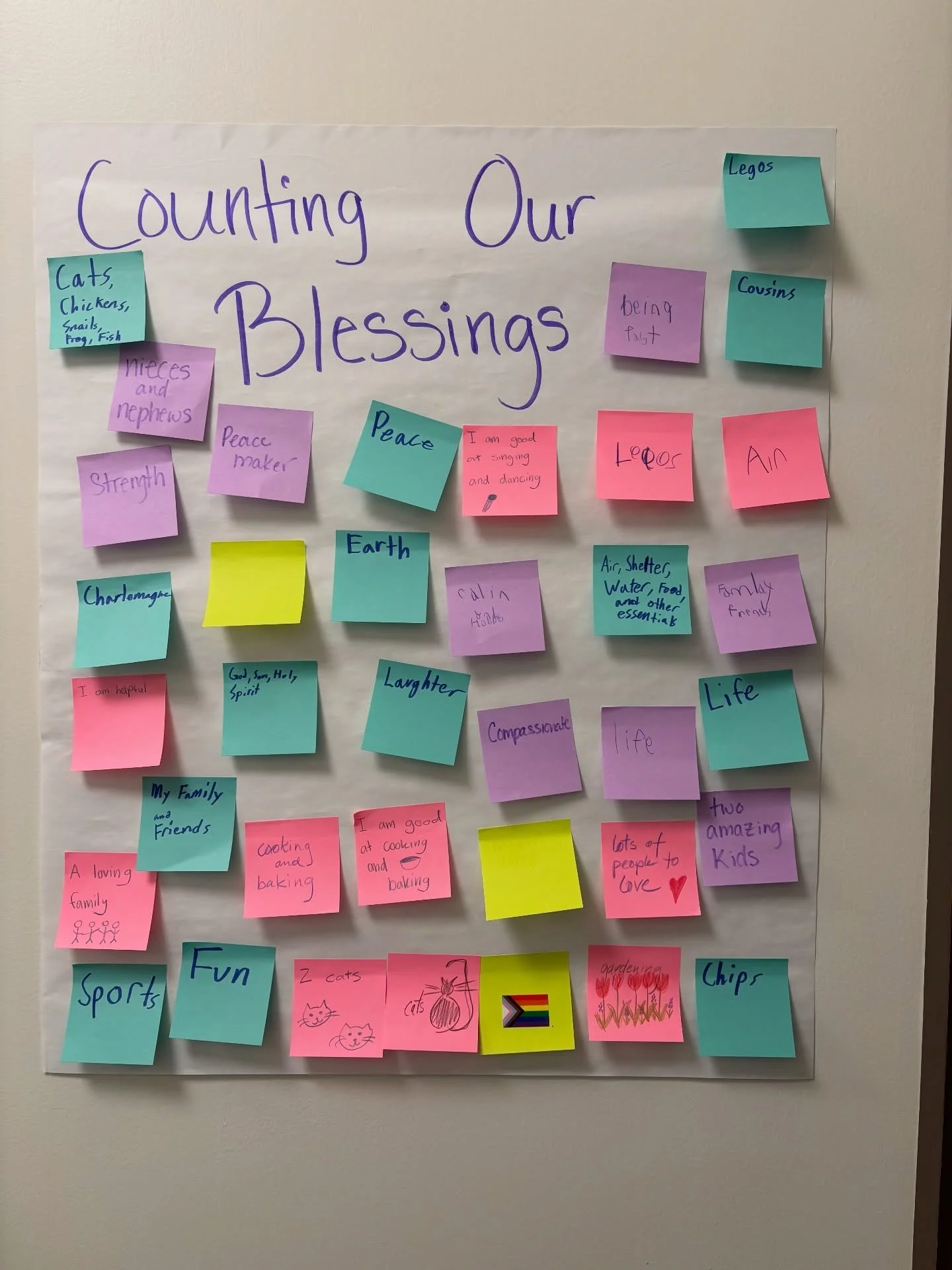
Where is Dayenu for you? Where in your life are you so blessed that sevenfold would be enough? Where do you see that instead you have received one hundredfold?
I would like to end with a portion of a poem that was sent to me this past week. It is by Hafiz, a 14th Century Persian poet.
“Even after all this time, the sun never says to the Earth, 'You owe me.'
Look what happens with a love like that; it lights the whole sky."
Even after all this time, God, Father, Son, and Holy Spirit never says to us on Earth, “You owe me.”
Look what happens with a Love like that; it lights the whole sky.”